
Concluding the Series: Carl Jung and the Esoteric Teachings of the Psyche
As we reach the final chapter of Sacred Minds, Hidden Histories, we pause to reflect on the extraordinary thinkers who have illuminated the deepest mysteries of human existence. This series has explored lives that dared to look beyond the surface, unearthing wisdom hidden in symbols, myths, and the silent corners of the soul.
Each figure we’ve studied shared a common purpose: to reveal truths that transcend time, culture, and convention. Their stories remind us that the pursuit of knowledge is not just an intellectual quest, but a spiritual journey—one that calls us to know ourselves, embrace our shadows, and recognize the sacred in our lives.
It is fitting to conclude this series with Carl Gustav Jung, a pioneer who transformed our understanding of the psyche by weaving science, mythology, and mysticism into a vision of the human mind as a vessel of cosmic truth. Jung stands as a bridge between the modern world and the timeless symbols of our collective past, offering us a map to navigate the hidden realms within.
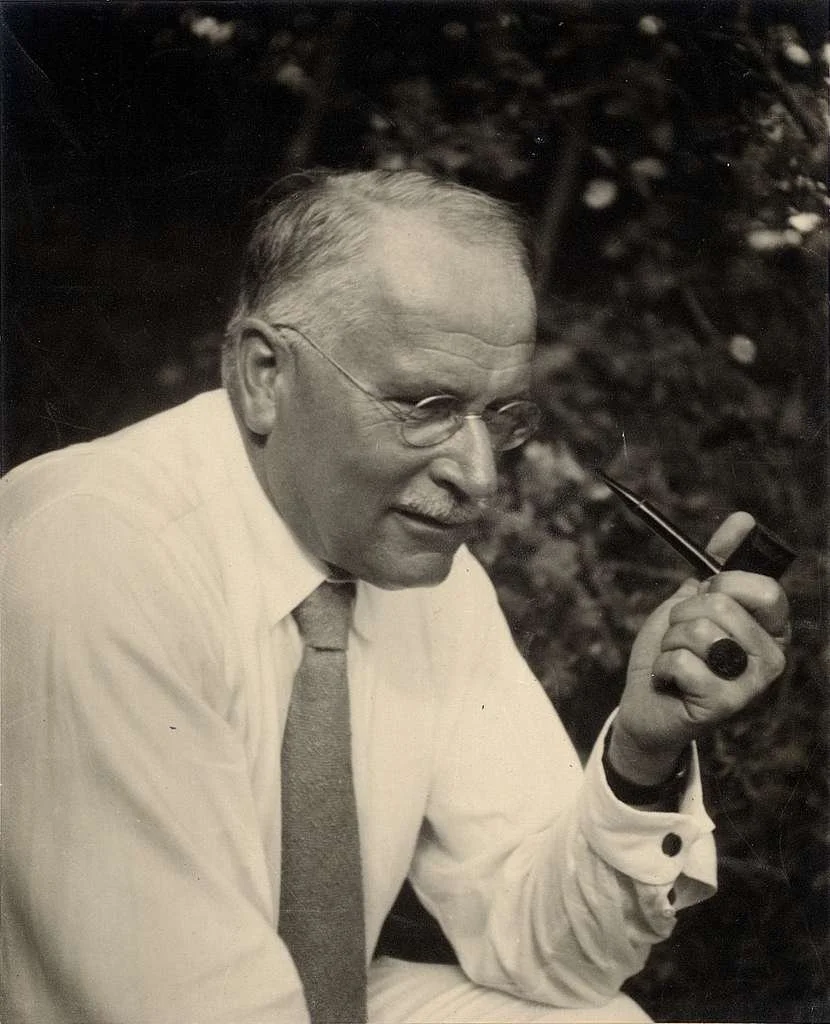
Carl Jung and the Esoteric Teachings of the Psyche
A Journey into the Hidden Realms of the Mind
Carl Gustav Jung was not just a psychiatrist, he was an explorer of the soul. Born in Switzerland in 1875, Jung spent his life searching for what lies beneath the surface of human consciousness. He believed the mind was more than a machine of thoughts and emotions; it was a vast inner world filled with secrets, symbols, and universal truths.
From an early age, Jung was fascinated by spiritual mysteries. He devoured books on Gnosticism, alchemy, astrology, and Eastern philosophies. He studied medieval texts and occult manuscripts, searching for ancient wisdom that could help explain the patterns he saw in his patients’ dreams and fantasies. Jung realized these old teachings pointed to something timeless—a language of symbols connecting every human being.
Jung and Freud: A Meeting of Minds and a Rift
In 1907, Jung met Sigmund Freud, the founder of psychoanalysis. Freud saw Jung as his heir, and the two men developed a close intellectual and personal bond. For several years, they exchanged letters, shared ideas, and worked to establish psychoanalysis as a revolutionary new field.
However, their friendship began to fracture as Jung’s interests drifted beyond Freud’s theories of sexuality and repression. Jung felt Freud’s focus on sexual drives was too narrow to explain the full complexity of the human psyche. Jung wanted to explore mythology, religion, and the spiritual dimensions of the mind, areas Freud dismissed as unscientific.
By 1913, the split was complete. Their parting was painful for Jung, but it set him on his own path, free to develop his radical ideas about the collective unconscious, archetypes, and the spiritual purpose of individuation. This break from Freud was a turning point, allowing Jung to dive deeply into the esoteric and mystical aspects of psychology that became his legacy.
The Red Book: A Descent into the Unconscious
One of the most mysterious chapters in Jung’s life began soon after his break with Freud, when he experienced a series of intense visions and inner crises. Instead of ignoring them, he decided to confront them head-on. He recorded these vivid dreams, dialogues, and images in a large, crimson-covered journal he called The Red Book.
In this book, Jung painted fantastical, esoteric illustrations and wrote in elaborate calligraphy. He explored encounters with figures like Philemon, a wise inner guide who symbolized higher wisdom. He described journeys through strange landscapes of his own psyche, facing his fears and discovering archetypal truths.
Jung later said that everything he developed, archetypes, the collective unconscious, individuation, grew out of these profound inner experiences. The Red Book became the heart of his esoteric studies and a testament to his belief that true knowledge of the psyche requires a direct encounter with its depths.
The Layers of the Psyche
Jung described the psyche as having three layers. The first was the conscious mind, where we experience daily life-thoughts, feelings, and awareness. This, he said, was just the tip of the iceberg.
Beneath it lay the personal unconscious, holding forgotten memories and repressed emotions. Here, he found the shadow, a hidden side of ourselves made up of fears, desires, and qualities we deny.
Deeper still was the collective unconscious. Jung’s most radical idea, it suggested we all share a common psychic inheritance: archetypes. These universal patterns, like the Hero, Mother, or Wise Old Man, shape our dreams, stories, and relationships. They are the secret threads connecting every human life.
Ancient Knowledge and Alchemy
Jung’s fascination with esoteric knowledge reached its peak in his study of alchemy. He saw alchemists’ quests to turn lead into gold as a metaphor for inner transformation. For Jung, alchemy symbolizes individuation: the lifelong process of uniting conscious and unconscious parts of the self. He called this the “golden path” to wholeness.
Archetypes and Myths
As Jung delved deeper, he saw the same symbols in myths, legends, and religious stories across cultures. The Hero who faces trials. The Great Mother who nurtures and devours. The Trickster who disrupts order. He realized these archetypes rose from the collective unconscious, reflecting truths about human nature.
Mandalas and the Self: Symbols of Wholeness
Jung discovered that many of his patients, and he himself, drew circular symbols during times of inner conflict or transformation. He recognized these mandalas as representations of the Self, the central archetype of wholeness that balances all parts of the psyche. Mandalas showed him that the psyche has an instinct to seek healing and order. For Jung, they were sacred maps guiding us toward psychological and spiritual integration.
Active Imagination: Dialogue with the Unconscious
To make this healing instinct practical, Jung developed active imagination: a method of engaging consciously with inner images and figures. By dialoguing with these symbols through art, writing, or visualization, people could bring unconscious material to light and work through hidden conflicts. Active imagination became one of Jung’s most important tools, offering a way to communicate directly with the psyche.
Synchronicity: The Cosmic Connection
At a seminar in 1930, Jung introduced the concept of synchronicity, when events align in uncanny, meaningful ways. He thought these coincidences revealed an invisible web connecting psyche and matter. A dream of a snake before seeing one in real life. Meeting a stranger who knows exactly what you need to hear. For Jung, synchronicity was evidence of a universe alive with hidden order and are manifestations of the collective unconscious.
Bridging East and West
Jung was among the first Western thinkers to study Eastern spiritual texts seriously. He read the I Ching, the Tao Te Ching, and Buddhist writings, and even traveled to India. He admired how Eastern philosophies viewed wholeness, duality, and balance, integrating these ideas into his work. By bridging East and West, Jung showed that the psyche’s search for meaning is universal, crossing cultures and traditions.
Psychological Types and Personality
Jung’s concept of psychological types, including introversion and extraversion, transformed how we understand personality. His work laid the foundation for popular tools like the Myers-Briggs Type Indicator and highlighted the importance of recognizing individual differences in how people perceive and interact with the world.
Dreams: Messages from the Deep
Dreams fascinated Jung. He kept detailed journals of his own dreams and encouraged his patients to do the same. He believed dreams were messages from the unconscious, carrying symbols that could heal or guide us. By interpreting these symbols, people could uncover hidden wounds and discover their path to wholeness.
A Legacy of Esoteric Psychology
Jung’s studies transformed psychology into a spiritual quest. He wove science with esoteric traditions, showing that understanding the psyche meant exploring both the rational and the mystical.
Today, Jungian therapy uses his concepts of archetypes, dreams, and shadows to help people heal and grow. Writers, artists, and filmmakers draw on his ideas to tell stories that resonate with our deepest fears and hopes. His vision continues to inspire those seeking meaning beyond the ordinary.
Changing How We See Ourselves
Carl Jung taught us that our minds hold ancient symbols, cosmic connections, and paths to transformation. His experiences, especially those captured in The Red Book, showed that true understanding of ourselves comes from courageously exploring our own inner world.
On a personal note, I am deeply grateful for Jung’s work and the light it has shed on my own psyche. His teachings have helped me face my shadow, understand my dreams, and discover a sense of purpose in life’s challenges. Jung’s insights have given me tools to embrace my authentic self and walk a path toward the whole journey I believe he meant for all of us to take.
Jung changed forever how we see the human mind: not as a simple machine, but as a vessel for timeless truths, cosmic connections, and personal evolution.
